Launching February 2027
The first brain science curriculum for elementary classrooms—so kids can thrive academically, socially, and emotionally.
Join the waitlist to be the first to teach our Executive Function Unit.
.png)
Kids are struggling — and the tools meant to help haven't kept up.
Suicide is the 2nd leading cause of death for children ages 10-14.
In the US, 2 in 3 fourth graders cannot read at grade level.
Kids spend 7+ hours a day on non-educational screens — and AI is on each one.
What we do
We give teachers the tools they need to build brain literacy in their students
We provide open-and-go lessons to help fundamentally improve how kids navigate the classroom and beyond.
Inside the platform

Choose a unit
Teachers log in and choose one of four units about the brain. Each unit includes student learning objectives, key vocabulary, and a caregiver handout that connects the learning to home.
Rationale: The resources are ready-to-use and require zero preparation or expertise. Built-in structures allow teachers to easily show admin and families what kids are learning and why it matters.
In each unit

Teach the lessons
Teachers integrate the lessons in their daily or weekly schedules — SEL blocks, morning meetings, etc. Each unit contains four lessons that build upon each other, with opportunities to construct knowledge in a sequential format.
Rationale: The four lessons cover the full scope of engaging, explicit instruction. The curriculum is simple for teachers and gives students transferable knowledge and skills.
In each lesson
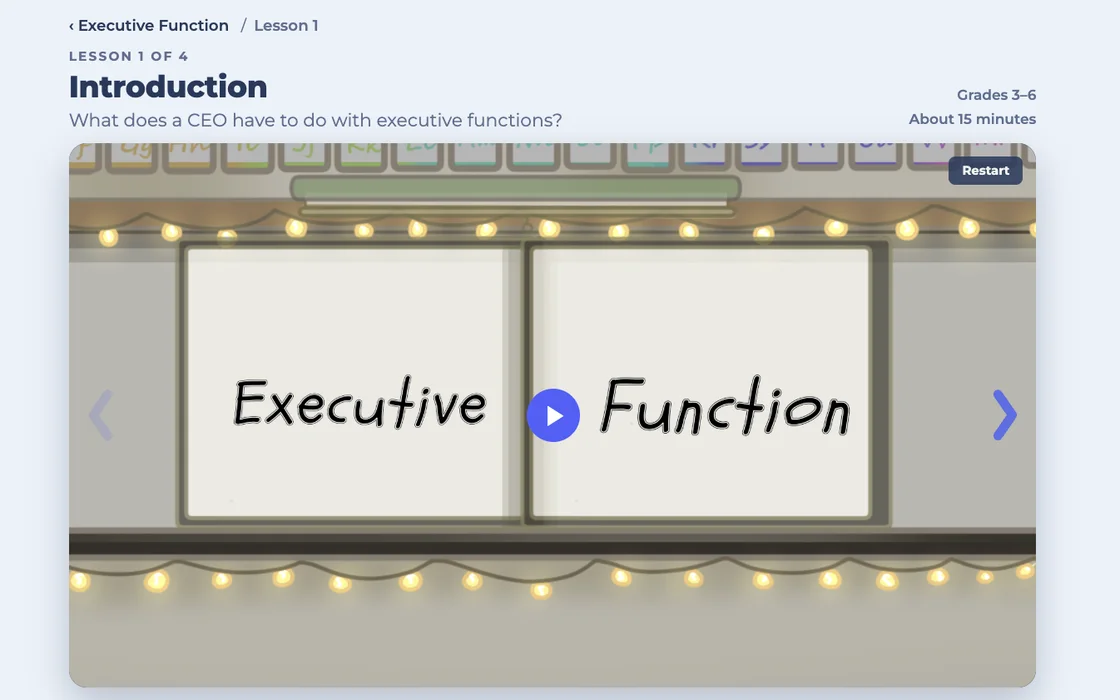
Guide the class
Teachers use the Live Classroom Aid — alternating animated videos and discussion prompts — to facilitate student learning. There are additional hands-on extension activities that vary in time and structure.
Rationale: Resources and teaching strategies are evidence-based to reduce cognitive overload, deepen understanding, and strengthen critical thinking.
Why brain literacy
The brain is the human advantage.
Now more than ever, kids deserve the knowledge and the power to navigate a complex world.
Understand the brain.
ExampleInhibitory control is one of the brain’s three core executive functions. If inhibitory control is a remote control, self-control is the pause button we press to stop and think before we act.
Build the skills.
ExampleEveryone holds their own remote, and pressing pause is a skill we keep developing into our twenties. Every time we name a feeling, take a belly breath, or weigh what might happen if we act now or wait, we get better at finding the pause button.
Watch kids thrive.
ExampleWhen we know we hold the remote, we take ownership of our choices, and over time, those choices add up. One study followed 1,000 children into their thirties and found that those with stronger self-control grew up with better health, steadier finances, and fewer problems with substance use and crime, regardless of IQ or family background.
Meet the founders.


Emma Bleakman, MS
Master's in Neuroscience and Education from Columbia University. Former 3rd/4th grade teacher. Conducted research at the Mount Sinai Friedman Brain Institute.


Bridget Malicki, MPP
Master of Public Policy from Duke University. B.A. Economics from Williams College. Background spanning startups, nonprofits, and management consulting.

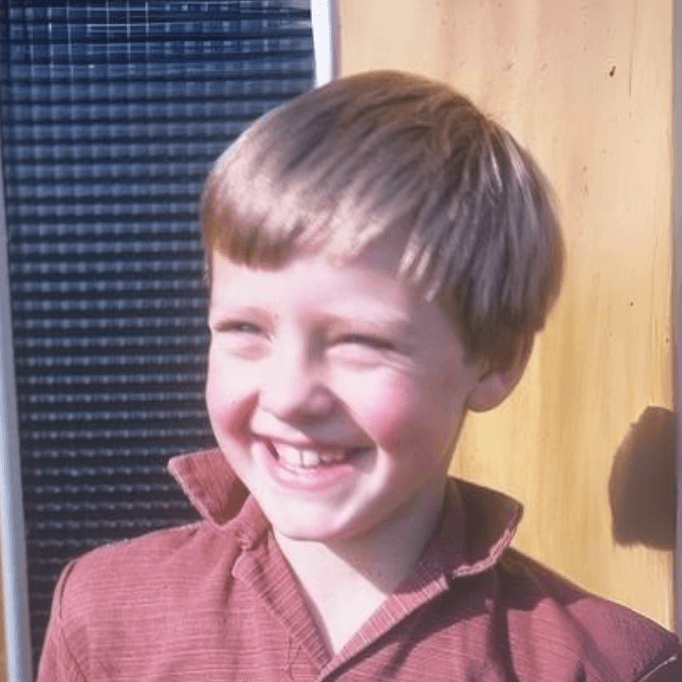
David Bleakman, PhD
A globally recognized neuroscientist, David brings over three decades of groundbreaking research and innovation to our team.
The future is bright light neuro.
And we don't want to leave you in the dark! Are you an investor, teacher, or like-minded organization that wants to learn more?
Let's talk →Launching February 2027
Be the first to teach the Executive Function Unit.